
Saturday, May 14, 2011
Another Very Good Day in Ostia Antica

Tuesday, May 10, 2011
Bus Ride
Just for fun, I set the camera on the ledge of the bus window and let it run for three stops through our neighborhood. If nothing else, it will give you a glimpse of what our "Prati" neighborhood looks like. The second two videos were shot on the street where my classroom building is. Also, it might give you just the tiniest, tiniest hint of the kind of chaotic traffic and anarchic parking situation that Susie had to deal with when driving our rented car. Finally, I wonder if it is a coincidence that two of the three clips end just outside a gelateria?
J
A Very Good Day in Rome

Today (Tuesday, May 10), we all went down to the historic city center. After a trip to San Clemente and its subterranean archeological wonders, we walked down the avenue running past the Forum. We enjoyed a great lunch at a shady outdoor cafe, then took a tour of Trajan's Forum and Marketplace. Will & Maya then headed over to the Campodoglio to check out the collections and the view.
As I write this, Susie is cooking her famous puerco asado for dinner. The happiest couple in Rome will be home soon. All in all, it was A Very Good Day in Rome.
https://picasaweb.google.com/SteveDC505/VeryGoodDayInRome?authkey=Gv1sRgCK344InglbCUtAE#
Saturday, May 7, 2011
Spanish Steps / Santa Maria del Popolo
 I took a walk through the Piazza del Popolo and down some shady side streets parallel to the Via Babuino to the Piazza di Spagna. The Spanish Steps are famous mostly for being famous, like many American celebrities. The azaleas planted there are in bloom but you can barely see them because of the masses of tourists congregating on the steps. The fountain in the Piazza has a comic twist. Because the water pressure at this particular site is so low, the artist couldn't make a huge fountain spraying gallons of water. Instead, he designed it as a shallow pool with a sinking ship in the middle!
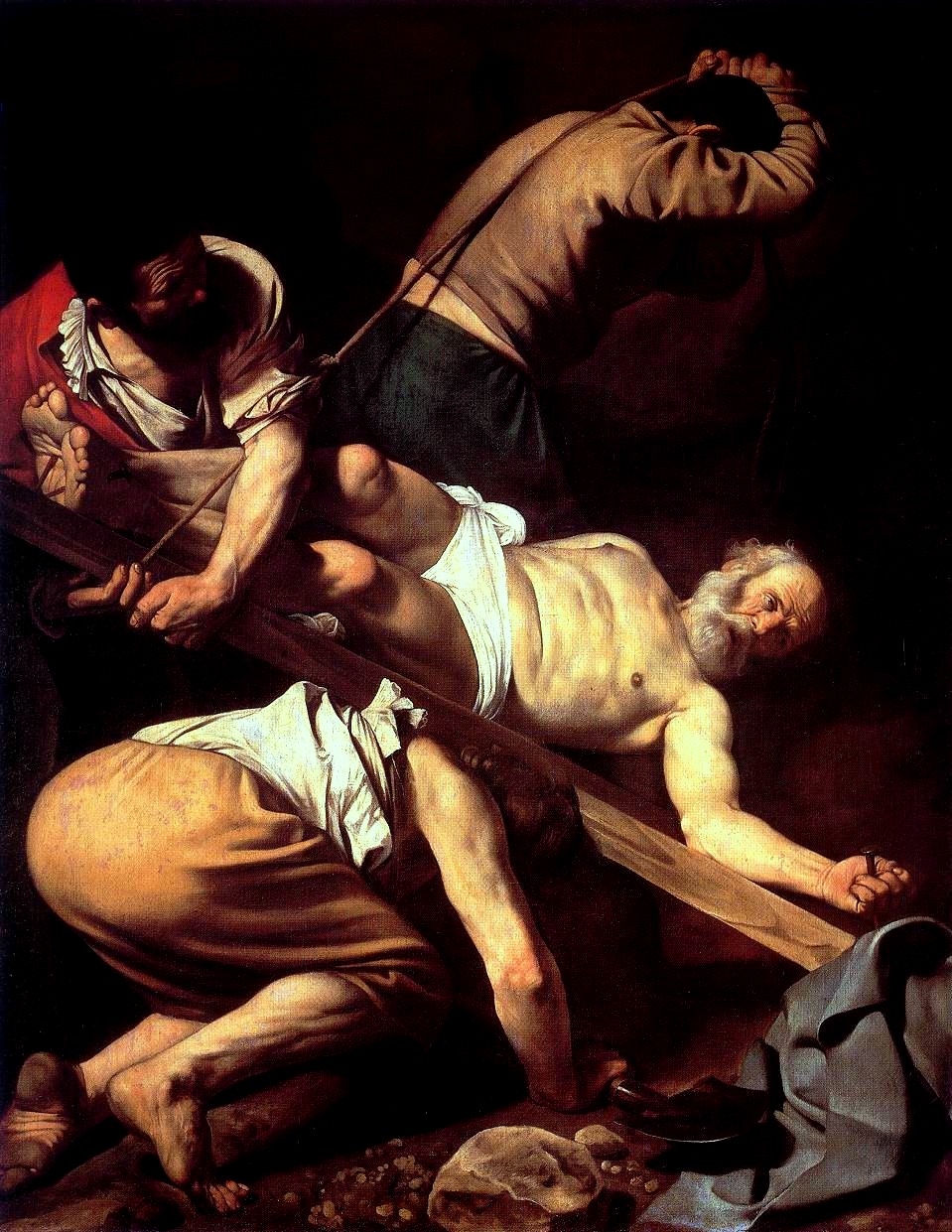
The church of Santa Maria del Popolo has two absolutely beautiful Caravaggio paintings in one of its chapels, but you can't take pictures of them. I took some interior snapshots of other things where I was allowed to do so, just so I could remember the church itself and those fantastic paintings. Here are online wiki links to The Conversion of St Paul on the Way to Damascus (1601) and The Crucifixion of St Peter (1600), both in the Cerasi Chapel.

Here are a half dozen pictures from my walk:
https://picasaweb.google.com/SteveDC505/Saturday?authkey=Gv1sRgCMSC2sG29LCS7QE#
Friday, May 6, 2011
Drive through the Mountains
Here are some rough video clips of our drive through the mountain range known as the Gran Sasso d'Italia. At an elevation of around 7000 feet, there was new snow on the peaks even as late as May 5.
Ascoli Piceno and the Mountains
 The final day trip on our beach vacation in the province of Le Marche took us to the town of Ascoli Piceno. The town was originally settled by the Piceni people and then conquered by the Romans in the first century BC. The main square is the Piazza del Popolo, lined on three sides by wide porticoes that shelter the entrances to shops and restaurants. The square is also bounded by the Palazzo dei Capitani del Popolo (13th century) and the church of San Francesco (13th-16th century). We enjoyed a relaxed stroll through the town's narrow pedestrian-friendly streets and checked out the open-air markets. For lunch, we sampled the local delicacy: large olives stuffed with ground meat, battered like a kind of teriyaki, and fried.
The drive home took us back over the mountains of central Italy. We were surprised to see how rugged and sparsely populated this region is. The peaks range up to about 7000 feet (roughly the elevation of Jemez Springs) and there was a considerable amount of snow still to be seen.
https://picasaweb.google.com/SteveDC505/AscoliAndMountains?authkey=Gv1sRgCNzvvdnQ2JnK8QE#
Urbino
 Urbino is a small, friendly hilltop town (ca. 16,000) that lies about 20 miles inland from the coast. It has now moved up to near the top of our list of favorite places in Italy. It is a completely charming small town: narrow medieval streets, generous open piazzas, interesting medieval and Renaissance architecture, a great collection of early Italian art, and a lively university atmosphere to boot. Plus the requisite yummy gelato. . . .
Urbino's most famous son is the artist Raphael (1483-1520). We saw two of his paintings in Urbino and visited the house where he was born. The interior, kitchen, and courtyard all have period furnishings, but the highlight might have been the modest little mortar and pestle where Raphael's father (also a successful artist) ground his own pigments.
The Ducal Palace is sometimes said to be the most beautiful Renaissance palace in Italy. The Duke of Urbino, Federico da Montefeltro, had this palace built for himself between 1444 and 1482. In addition to being a successful general and ruler, Duke Federico was also a true "Renaissance man," devoted to architecture, literature, art, music, and fine living. Today, the palace holds a splendid art collection. The building complex is beautifully designed and richly decorated, a work of art in its own right. The "studiolo" (the Duke's private study) is a marvel of inlaid wood in fascinating three-dimensional perspective. There are numerous pieces of late medieval and Renaissance art, sculpture, and tapestry, including two paintings by none other than Rafael himself.
https://picasaweb.google.com/SteveDC505/Urbino?authkey=Gv1sRgCN6pmbquoJGkrQE#
Subscribe to:
Posts (Atom)